A sore spot or no change
AOD-9604 effects reported by people and studies
Most reports describe few complaints and little change in body fat.
What might a person notice first?
A shot may leave a red or tender spot. Many people say they notice nothing else.
People often see little or no body-fat loss after trying the drug. They also report no puffy joints or stored water.
This page has two kinds of accounts. Studies provide one kind, and personal stories provide the other.
Personal stories can be honest while still naming the wrong cause for a change. They aren't proof from a fair test.
AOD-9604 did not raise IGF-1, a blood signal tied to growth. Human fat loss with AOD-9604 still wasn't shown in a fair comparison.
Your choice deserves both parts of the answer. This page gives no treatment or dose plan.
A quiet day without side effects may feel reassuring. That does not prove the drug made anyone lose body fat.
What AOD9604 benefits do people describe?
People trying the drug on their own gave these reports; no fair study checked the claims. Food, exercise, and hope may shape what someone notices.
People mainly liked having few side effects while trying it. Many said the drug felt much like placebo.
People who had used growth hormone mentioned less swelling and tingling. They also noticed no extra water around their joints.
Some people said they had a little more energy. Others said they felt less hungry.
Neither report proves that the drug caused the change. A new diet often started at the same time.
People whose shape changed also credited eating less and training. Nobody can separate the drug's part from those changes.
A personal story tells what one person noticed. It cannot show what caused that result.
Feeling fine does not mean body fat fell. A good experience isn't proof of weight loss.
Which AOD9604 side effects do people report?
The report heard most often is little or no visible fat loss. That agrees with the failed adult weight tests.
Some people feel misled by the sales pitch. The promised change often does not appear.
A shot may leave a small red or itchy spot. The sore skin often clears by itself.
People usually report no added strength or muscle. Unlike full growth hormone, the drug did not raise a growth-linked blood chemical.
A shot near belly fat won't melt that one spot. Bodies don't choose fat loss by shot location.
Some vials come from sellers outside the approved drug supply. The vial may contain something unlike its label.
Most complaints in these stories sound mild. The missing weight loss matters most when sellers promise fat loss.
Which safety facts matter most?
Published studies give us the known safety facts. They do not make this drug approved care.
AOD-9604 has no approved human use. It began as a weight drug taken by mouth.
The drug never gained approval or a set dose. Human use is still unproved [9].
The adult weight test failed. Adults had the same weight change as the placebo group [10].
Most fat findings came from animals. Mouse, rat, and cell tests found changes in fat making and burning [3].
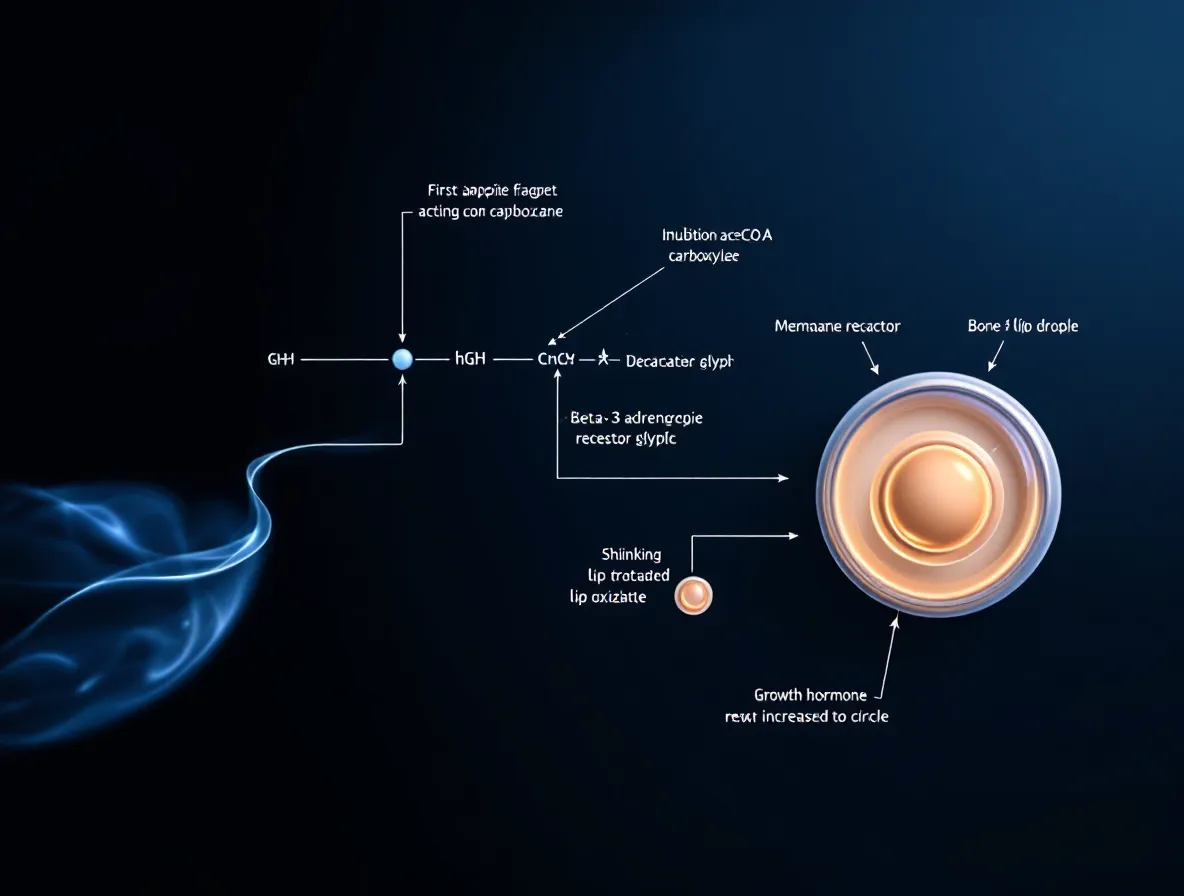
Treated mice made more beta-3, a protein that helps fat cells use stored fat. Without working beta-3, their weight loss did not last.
Mice aren't people. Obese mice became lighter and carried less fat during long treatment [1].
Safety over many years is unknown. The longest human tests lasted about 24 weeks [9].
Tests of that size can miss rare harm. No large study watched people for many years.
Later reviews still found no proof of weight loss. AOD-9604 never reached approved use [8].
Sport has a separate ban on AOD-9604 [13]. An athlete can fail a drug test because of it.
Short tests may miss harm that appears later. They may also miss a rare problem.
Mild side effects during a short test cover only those weeks. They don't settle what years of use could do.
How did the work change over time?
In the 2000s, overweight adults tested AOD-9604 tablets. Metabolic Pharmaceuticals ran several tests in Australia.
The drug came from Monash University work on growth hormone. Researchers focused on one small section linked with fat use.
The largest adult test brought no added loss on the scale. By 2007, the weight program had ended [9].
Researchers later studied rabbit knees with arthritis and cartilage harm. The rabbits received shots inside their knee joints.
That history still matters for claims made today. Careful tests found that the drug missed its main goal.
The adult result gives your choice a firm fact. A new sales page can't erase that test.